
Equipping you to grow in being a disciple and making disciples
Welcome
Welcome to Practical Discipleship!
You may have just taken your first baby steps as a Christian. Or you may have been following Jesus for fifty years. Either way, welcome to these resources. They are designed to help you deepen and grow in the life of discipleship—the path of following Jesus.
One of the wonderful things about following Jesus is that this journey never ends. No matter how long we have been on this path—whether it is weeks or decades – there is an opportunity to grow further.
These resources are here to help make clear what that life of discipleship looks like and to explore practical steps we can take to live it out.
A compass
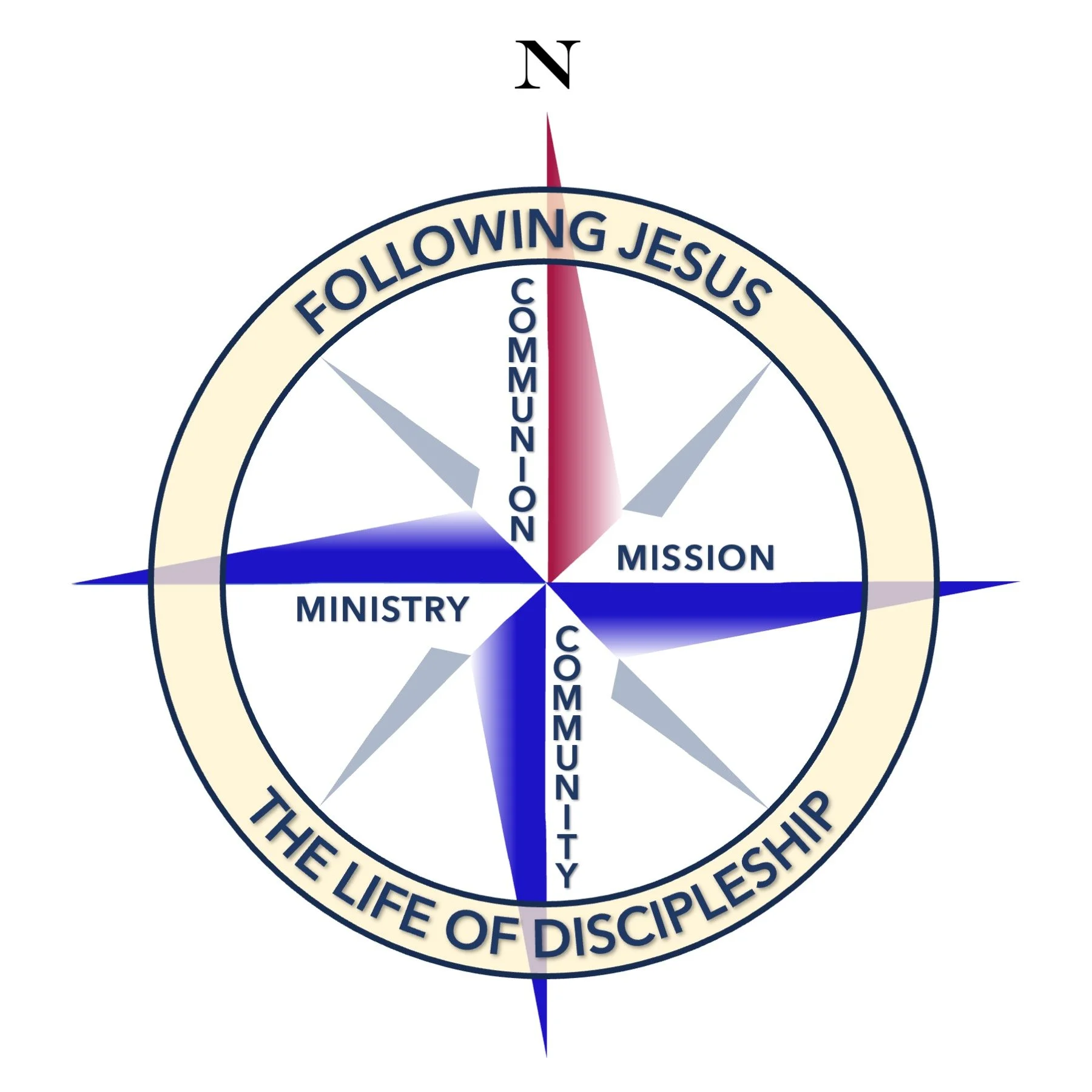
In these resources, we will use the picture of a compass as an image to guide us along this path. In the days of GPS and navigation apps, compasses are old technology. But they serve as a great illustration of what all these technologies are meant to do.
The first thing they do is orient us. If we are starting on a journey, they help us work out where we are and in which direction we need to head. For those who are just starting the life of discipleship, our compass will help give a road map of what following Jesus looks like.
The second thing they do is reorient us. If we have been going on a journey for some time without looking at the map, we can get distracted or lose sight of where we are going. We can end up off the path. Possibly not lost, but slightly off the trail we thought we were on. A compass can help us find our true north. It can help to bring us back to the path.
As we begin
You may be wondering: why do we need a compass? We have the Bible. Isn’t that enough?
Absolutely. The Bible is our ultimate roadmap. It is our key reference that helps us navigate this life of discipleship.
But the Bible has a lot in it. When we are starting the Christian journey, it can seem there is so much that we need to take in to work out how we live as disciples. Our compass can help to identify the key points of living as a disciple and practical ways to do that.
And when we are further along in our faith, we may have a strong understanding of the Bible, but it doesn’t guarantee that we are fully experiencing and living out the life of discipleship that Jesus has invited us to. We can feel that we are slightly off track. Not in what we believe, but in how well we are living it out. There are times where it can be helpful to come back and to take stock of where we are going. Our compass can help us regain our bearings for living well as a disciple.
What does our compass look like?
So. What does our compass look like? Like any compass it has four main points. These points indicate four key areas of following Jesus. Breaking down discipleship into four key points does two things. It breaks down following Jesus into four manageable pieces. It provides a bridge between the large picture of following Jesus and living a life that glorifies God and the small steps of day-to-day practice. And it enables us to keep a healthy balance between the various aspects of following Jesus. It provides a framework that we can keep coming back to—to reorient, recalibrate and recentre where our lives are going in following Jesus through the twists, turns and changes that life brings.
What are those four points? Let’s look at each one briefly.
The first point of the compass: communion
The first and most important part is communion—our relationship with God.
The astonishing reality is that the living God invites us into a relationship. The story Jesus tells of the prodigal son gives us a glimpse into God’s heart. The father stands at the door of his house, watching waiting and hoping for the son’s return. And when his son returns, he runs—arms open, ready to welcome him home. That is not merely a story about a father long ago. It is a window into how God feels about me.
The Bible paints a picture of a loving father God. A God of relationship. A God who knows us and delights in us. A God who wants us to know what is on his heart—and a God who invites us to share what is on our heart: our longings and desires, our fears and questions, our joys and our griefs, our gratitude and our pain. God is there waiting to hear and respond to all that is on our heart. It is truly remarkable.
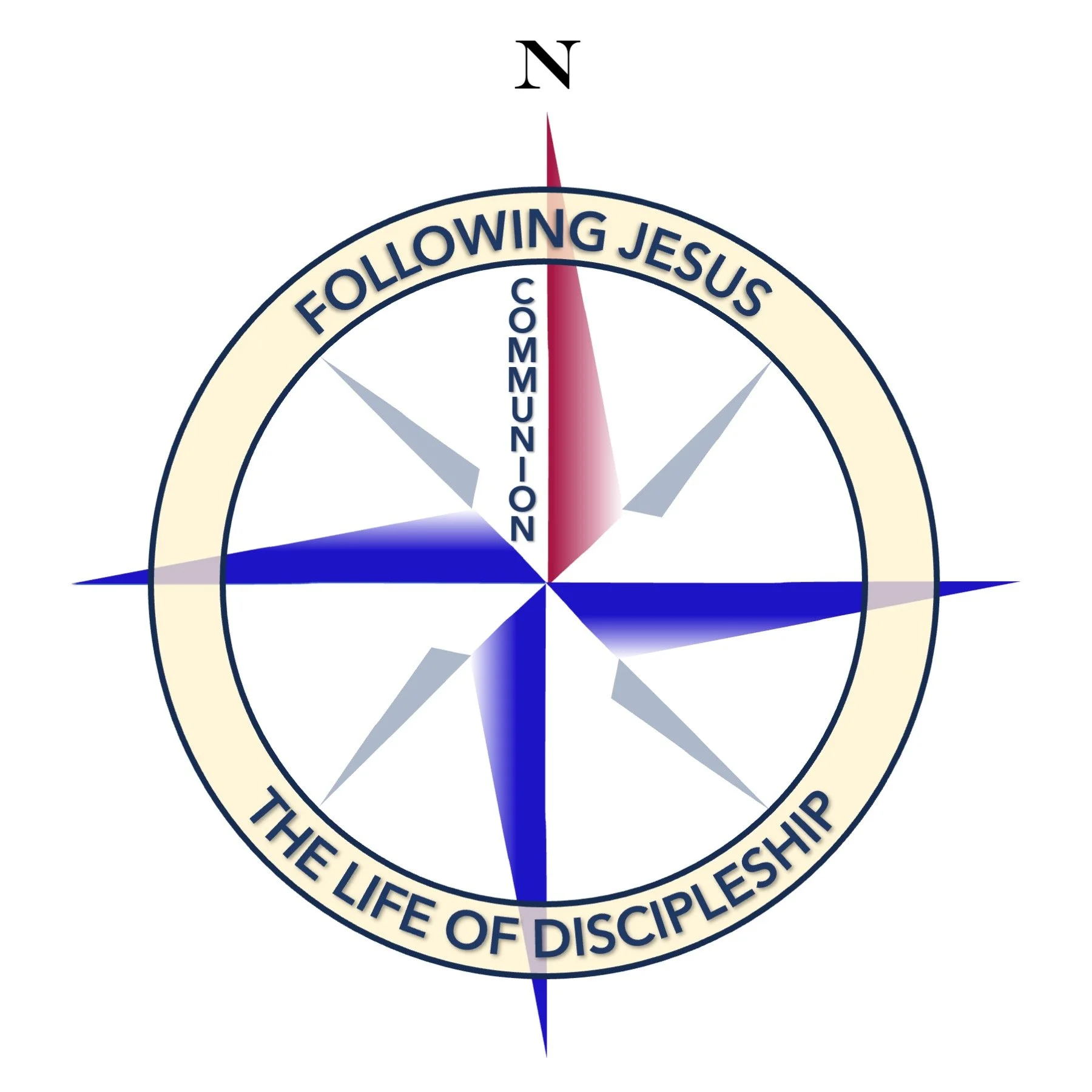
Communion then is so much more than gaining information about God. It is a relationship. A relationship where we can come to God expecting to hear his voice, to encounter his love, to be shaped by his presence.
When we do that, something profound happens. Our hearts change. And when our hearts are changed, our actions follow—not out of a sense of a duty, but as an overflow of a changed heart.
God is our true north, and communion helps us steer toward that true north. It comes before everything else. Without it, we lose our bearings. Without it is impossible to follow Jesus well.
The second point of the compass: community
The second point of our compass is community—our shared life with other believers.
From time to time someone will ask the question: Do I really need to go to church? Can’t I follow Jesus on my own?
In one sense you can. But it is not the path to flourishing as a disciple. One of the key means that God has given for our growth as a disciple is in community—the church. The Bible describes the church as a body. And like a body it is has different parts, each distinct, each necessary.
All these parts have different functions and roles with different strengths, gifts and perspectives. Each of these parts of the body come together to make the body function well and to grow in maturity and love. God’s church is full of ordinary people and sometimes it can be hard to believe that they are God’s gift for my growth as a disciple. But in God’s grace and through the work of the Holy Spirit, they can be a powerful influence in my life.
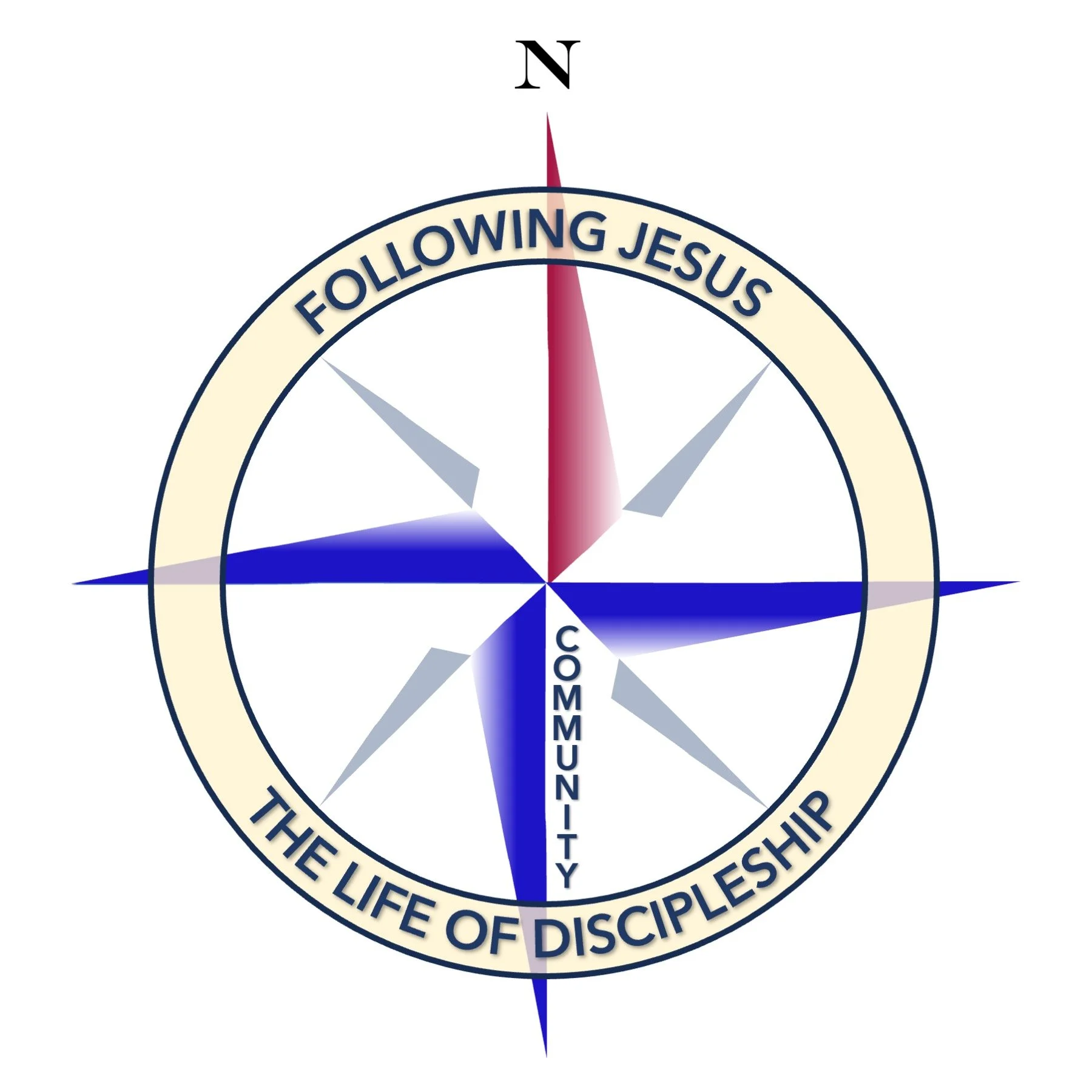
Community is much more than a place where we can feel safe and comfortable. In a healthy community, we are encouraged, supported, inspired, loved and cared for. But it is also a place where are challenged. Where we are taught. Where our rough edges are gently shaped by grace and truth.
If communion sets our direction and true north, good community helps us to stay on course—challenging us when we drift, encouraging us when we feel weak and walking alongside lovingly in both hardship and joy.
The third point of the compass: ministry
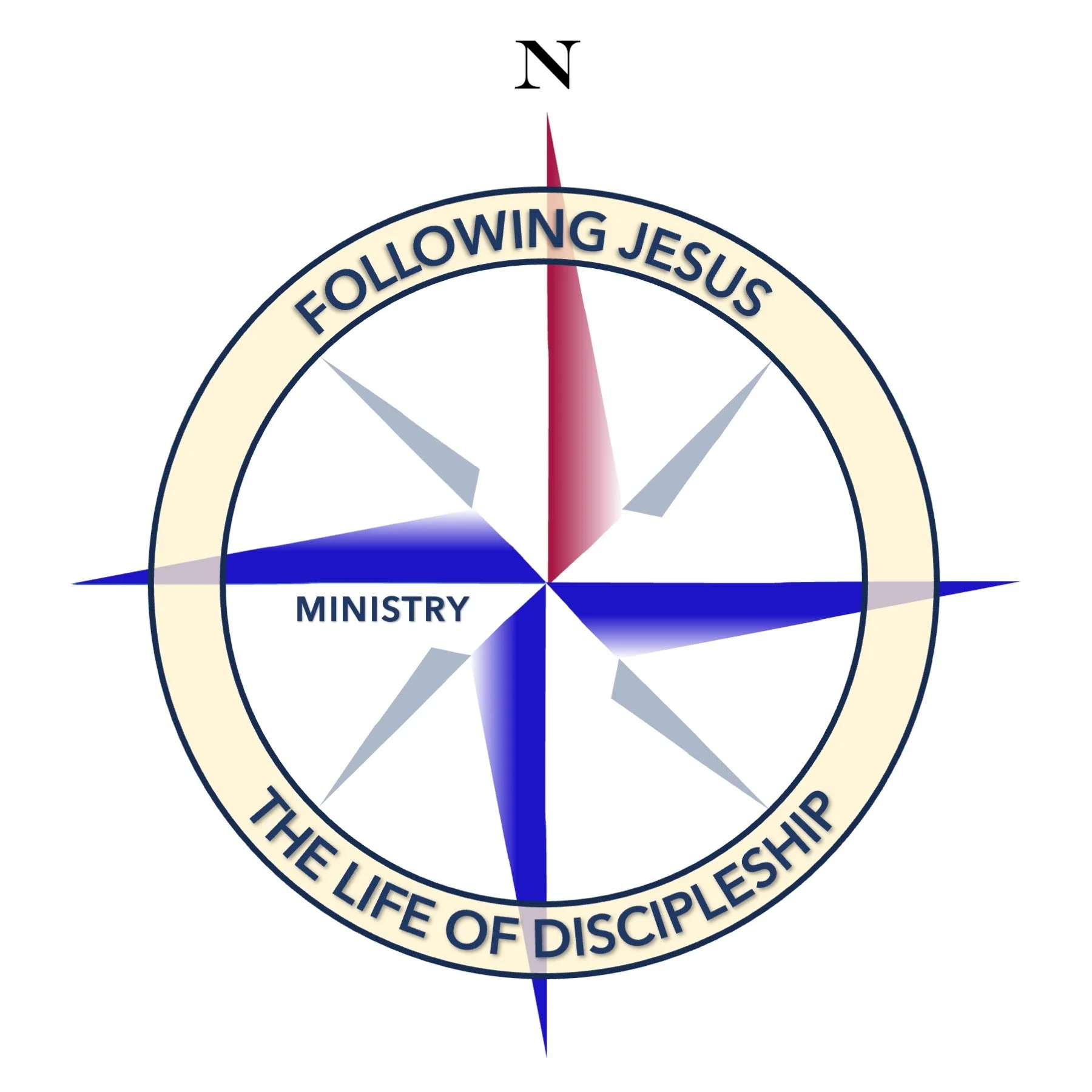
This third point is ministry. Communion is our connection with true north. And community supports us on the journey. But following Jesus is not just about enjoying a relationship with God—good as that may be. And it is not just about finding a loving community where we feel a sense of belonging and care—great as that can be too.
Discipleship flows outward from both of these. A healthy relationship with God and a healthy community overflow in love and service to others—in ministry.
Ministry takes place in many situations. We serve within the church. We use our gifts, time and resources to strengthen the community of believers in which we find ourselves. But ministry also extends beyond the church community—to family, friends, colleagues, neighbours, clients, patients, and students. Wherever God has placed us, we serve with love—we minister.
Ministry is not driven by duty alone. It is the natural outworking of a heart that has been shaped by communion and supported by community. When we know we are loved, we become people who love.
The fourth point of the compass: mission
The fourth point of our compass is mission. Mission is simply carrying out the task that we have been given as disciples to go into the world with the good news that we have learned and experienced ourselves.
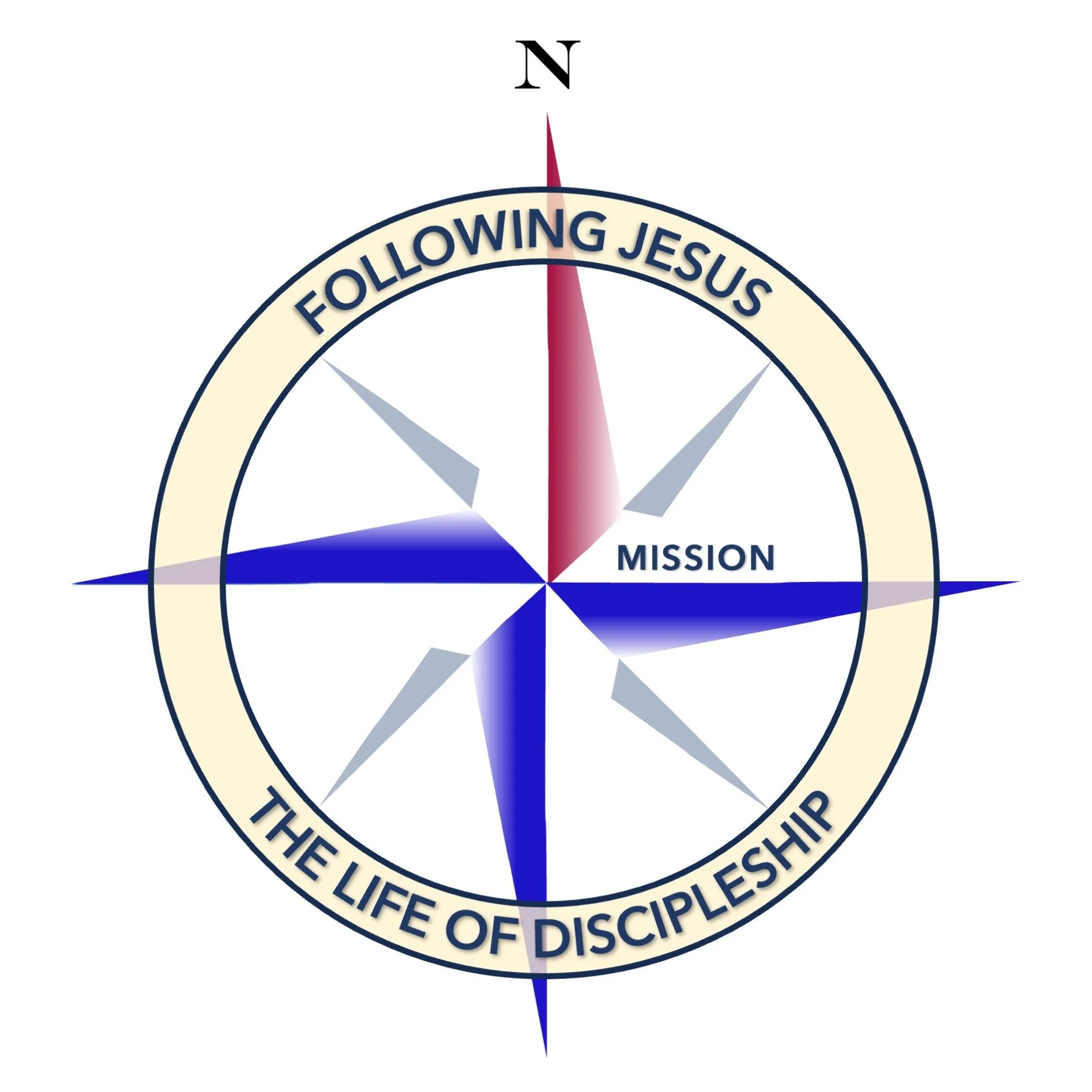
Mission is a natural extension of our ministry. Because amongst those family, friends, colleagues, clients and even strangers we meet, there will be people who do not know or understand the depth of God’s love for them—they do not know the message of good news that we carry with us. As we live authentically—marked by grace, integrity and compassion—we embody good news. Sometimes we speak it. Sometimes we demonstrate it. Often both.
At its best, mission is not awkward, embarrassing or hard work. It is simply living as a disciple amongst those who don’t know what it means to follow Jesus.
The centre of the compass
So, we have four points to our compass—communion, community, ministry and mission. But what lies at the centre?
To answer that, we simply turn to some of Jesus’ most famous words. When he was asked what the most important commandment, he replied: to love God and to love our neighbour.
This is central to everything. It is central to the four points that we have mentioned, and it is central to everything we cover. If the arm of a compass doesn’t sit properly on its centre it will not read correctly. In fact, it will find it hard to function at all.
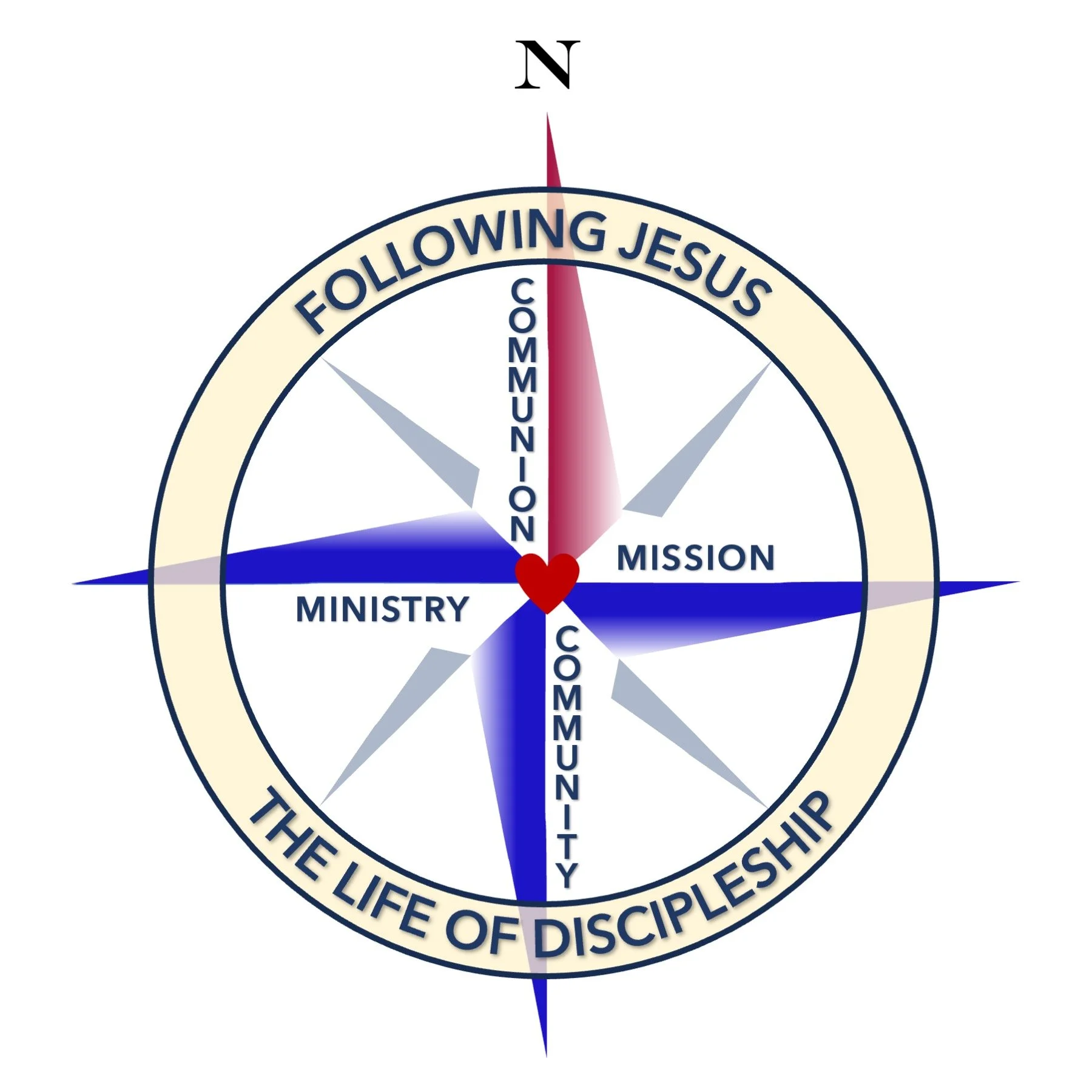
Love lies at the heart of all of these four points. God is love. That lies at the heart of communion. And Jesus said that disciples would be known by their love. That lies at the heart of community. And both ministry and mission are an overflow and expression of God’s love to those around us.
If love is not part of our following Jesus, something has gone wrong at the centre.
Where are we going?
Now that we have our compass, it seems to be a good time to ask the question: where are we going?
In the resources that follow, we will dig a bit deeper into each of these four points of the compass. But these resources are not just about learning how to think as a disciple, they are to help you live as a disciple.
As we explore each of the four points in more depth, there will be a section that explores how to put it into practice. It is possible to do this alone, but ideally it is best done alongside someone else. May I strongly encourage you to find another Christian who is happy to walk through the resources with you. They do not have to have theological training. They do not need to be a minister, pastor or church worker. They simply need to be someone who is seeking to follow Jesus with all their heart and preferably has been doing it for some time. Their job is not to teach you facts, but to share from their own experience of living as a disciple of Jesus, and to pray and encourage you in your own journey.
If you do approach someone and they are wondering about what you are asking from them, the minimum commitment is getting together six times usually about a month apart. You may decide you want to keep going after that but it is not necessary. These six sessions should help to build a foundation for following Jesus that can last your whole life. But you may like to continue to meet to walk along the path as companions together encouraging, supporting and challenging each using the compass as a guide to keep you on track as you follow Jesus together.
What can you expect?
One of the wonderful things about following Jesus is that it changes us. It is a journey of transformation and growth. God, through the Holy Spirit is doing a work in us to make us more like Jesus. We may not be sure where God is leading us. But we can be sure that wherever he leads us, his desire is to see us grow.
How does this growth actually happen?
The Bible holds two truths together.
First, growth is God’s work. When we trust in Jesus and follow him, he comes to live in us, and we become a new person. The Spirit dwells in us and transforms us “from one degree of glory to another”. We cannot make this happen on our own. It is a work of grace.
But, we are also called to respond. Even though growth is God’s work, the Bible doesn’t leave it there. We are also told to do our bit. We are encouraged to “make every effort”, “to train yourself in godliness”. We are urged to be doers of the word and not hearers only. God provides the means and the power. But we also play our part. We respond with intentionality.
And this brings us back to our compass. Two of the primary means for our growth are communion and community. As we develop and deepen our relationship with God and as we meet with other believers, they provide an opportunity for our growth in discipleship. They do not magically transform us. Sitting in church and listening to a sermon is not a guarantee for spiritual growth. But when we faithfully engage in practices that deepen our relationship with God and with each other, we place ourselves in the path of the Spirit’s work.
Throughout Christian history, wise believers have recognised this beautiful partnership. We depend wholly on God’s grace, and we actively use the gifts and means he has provided. When that balance is held, churches come alive. Individuals flourish. Not because we are striving anxiously, but because we are cooperating joyfully with the Spirit’s work.
Sustaining a lifetime of discipleship
This is why practice matters. Communion and community are not abstract ideas. They are lived out through rhythms and habits that shape us over time. And the heart that is nurtured through those habits overflows in the practices of ministry and mission.
So, as we continue, we will explore practical ways to deepen communion with God and to engage meaningfully in community. We will also explore what it might look like for you to use the gifts and abilities that God has given you in the wonderful work of ministry and mission.
But we need to remember - this is all grounded in grace. These practices are not about earning God’s favour or acceptance. And it is about self-development. The practices we will explore are simply ways of opening our lives to God’s transforming work.
My prayer is that you will see this not as a burden, but as an invitation – to the rich and abundant life that Jesus promises to those who follow him. A life where your direction is clear, your heart is alive, and your experience a steady deepening in the life of following Jesus.
And at the centre, may there always be the steady pull of true north—the love of God, drawing you forward into a lifetime of faithful discipleship.